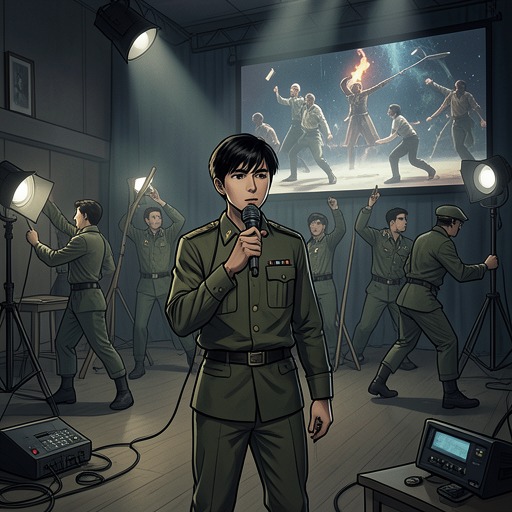
Son Sungdeuk
O fenômeno Jungkook: O sucesso do BTS e a criação de um superstar mundialSon Sungdeuk is the performance director who recognized Jungkook’s promise before BTS had debuted and helped convert that promise into disciplined technique. His importance lies in the bridge he represents between instinct and accomplishment: Jungkook’s later reputation for fluid, precise dancing is repeatedly connected to the training, correction, and encouragement that Son provided during the singer’s formative years.
Identifying Jungkook’s Potential
Son worked within Big Hit Entertainment’s small and demanding trainee system, where the future members of BTS practiced in a basement space beneath Yoojung Sikdang because the company’s five-story Cheonggu Building could not accommodate them. He was responsible for teaching dance, while vocal instruction came from Kim Sung-eun and additional guidance came from the more experienced dancers J-Hope and Jimin. In that environment, Son selected Jungkook as the most promising trainee and took a direct role in developing the fourteen-year-old’s abilities.
The choice was significant because Jungkook had entered Big Hit without formal dance training. His natural aptitude was visible, but it had not yet been shaped into the sharp, synchronized movement expected of a K-pop idol. Son therefore served as the mentor who could recognize raw ability before it had acquired professional form. The later image of Jungkook as an unusually gifted performer rests in part on this early judgment: Son did not simply teach a prepared dancer; he identified a young trainee whose potential demanded concentrated investment.
The Los Angeles Training Period
In July 2012, Son accompanied Jungkook on his first flight, a twelve-hour economy journey from Seoul to Los Angeles. The trip lasted nearly a month and was designed to expose the trainee to a more advanced dance environment. After arriving at Los Angeles International Airport, Jungkook went directly to classes at Movement Lifestyle in North Hollywood, a studio founded by Shaun Evaristo whose instructors included dancers associated with the professional choreography world. Son had chosen the setting so that Jungkook could learn from a culture of dance more specialized than anything available to him before entering the company.
The training began harshly. On the second class, still affected by jet lag, Jungkook described experiencing a nervous collapse because he could not understand the instructor and found the choreography far more difficult than expected. Son then worked with him through a complicated sequence involving popping, locking, and finger tutting for Joe’s “Pull My Hair.” In the rehearsal footage, the two review the passage together; Jungkook smiles shyly at the end, acknowledging his mistakes while considering how to correct them. Son’s role in this scene is not to protect the trainee from difficulty but to make difficulty legible and actionable.
The month also included an element of deliberate expansion beyond the studio. Bang Si-hyuk instructed Son to let Jungkook have fun and try unfamiliar experiences, and Son took him to the Getty Center, where he saw exhibitions including drawings by Gustav Klimt and black-and-white portraits by Herb Ritts. Jungkook also spent time at the beach, skated around North Hollywood, and visited Santa Monica before returning to Korea. These experiences gave the training period a dual character: it was an intensive professional assignment, but it also widened the young trainee’s sense of the world and of the person he might become.
From Correction to Confidence
According to Son and the other BTS members, Jungkook returned from Los Angeles changed. The boy who had struggled to follow an unfamiliar instructor had gained confidence and a sharper determination to become one of the best performers in the world. Son described the transformation as Jungkook gaining “the eye of the tiger.” That description does not reduce the improvement to supernatural talent. The surrounding account emphasizes practice, effort, repeated error, and the desire to improve. Son’s mentorship gave structure to those qualities, helping Jungkook turn an initial shock into accelerated development.
Son’s influence can also be seen in the first public dance footage associated with BangtanTV. Four months before BTS’s debut, a little over one minute of rehearsal showed fifteen-year-old Jungkook at the back of a basement studio under fluorescent lights, dancing to Mike Posner’s “Save Your Goodbye” in choreography created by Kyle Hanagami. Although Jungkook remained young and inexperienced, his arms moved with unusual fluidity while his body struck each beat with precision. The visible counting of the eight-beat pattern suggests a dancer working through structure rather than merely improvising charisma. Son’s earlier decision to send him to Movement Lifestyle had helped create the conditions for that development.
The same discipline later supported the demands of BTS’s performance style, in which choreography functions as a major means of communication across language barriers. K-pop idols are expected to perform at a level closer to professional dancers than to conventional Western pop singers, and Jungkook’s ability to sing while executing demanding movement became part of his public identity. Son’s training therefore contributed not only to isolated dance technique but to the integrated performer Jungkook became.
Witness to a New Standard
Son’s relationship with Jungkook continued beyond the trainee’s adolescence. By the time Jungkook prepared his solo album Golden, a decade of dance development had turned the former student into an artist capable of treating choreography as an expressive extension of his singing. “Standing Next to You,” the album’s title track, was conceived as a grand tribute to Michael Jackson, an influence on Jungkook as both vocalist and dancer. Meeting that ambition required more than vocal control: it demanded difficult footwork, hip movement, and command of the full performance space.
For the video, filmed in Budapest, Jungkook raised his dancing to another technical level. Son, who had taught him as a teenager, acknowledged that he became a fan while watching his pupil reach that standard. The reversal is revealing. The teacher’s original recognition had helped launch Jungkook’s development, but the finished performer could now astonish the teacher in return. Son’s response confirms the scale of the transformation without erasing the labor behind it: the mature artist remained connected to the young trainee he had once guided, yet had exceeded the limits of that first instruction.
Narrative Significance
Son Sungdeuk embodies the formative labor hidden behind Jungkook’s apparent naturalness. In public, Jungkook can seem effortless, whether dancing in a rehearsal room or commanding a major solo production. Son’s presence supplies the missing history of that ease: selection, travel, unfamiliar instruction, embarrassment, correction, repetition, and gradual confidence. He also links different stages of Jungkook’s career, from the basement training rooms beneath a restaurant to the technically ambitious international production of “Standing Next to You.”
His importance is consequently both personal and structural. Personally, Son is the mentor who accompanied Jungkook through the first decisive test of his ability and helped him acquire the determination later described as a tiger’s gaze. Structurally, he represents the performance-training system that turns youthful promise into the synchronized, multilingual, globally legible spectacle of K-pop. Yet the account does not make Jungkook a manufactured product. Son’s instruction matters precisely because it meets Jungkook’s persistence, musicality, and willingness to keep working. Their relationship illustrates the book’s larger tension between apparent genius and sustained labor: what looks effortless onstage is the visible surface of years of guidance and practice.